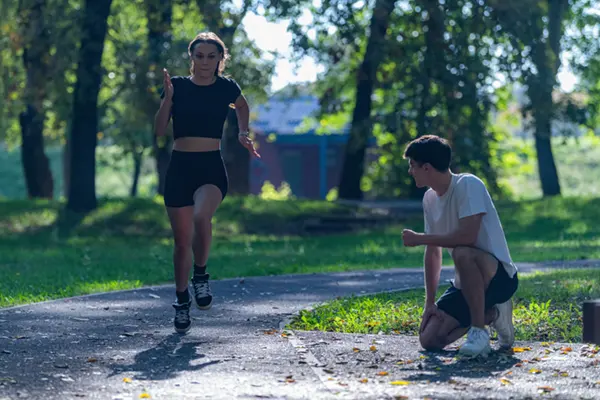
Rucking — fitness rucking — is walking with a weighted backpack as deliberate exercise. Not hiking for leisure, not carrying a bag to work. A loaded pack, a purposeful pace, and terrain that makes your body work. Done properly it builds posterior chain strength, burns serious calories, and develops cardiovascular fitness with a fraction of the joint impact of running. It requires no gym, no membership, and no equipment beyond a backpack and something heavy to put in it. Ireland, with its trails, coastlines, forest paths, and near-constant cool weather, is close to ideal for it.
The concept has roots in military conditioning — soldiers have trained under load for as long as armies have existed — but fitness rucking has crossed firmly into mainstream training over the last decade. The GORUCK movement in the US built an entire community around it. Obstacle course races now regularly include weighted carry sections. And for anyone who finds running too hard on their joints but wants more than a casual walk, rucking sits in a genuinely useful middle ground.
Why Weighted Walking Works as Fitness Training
The load changes everything. Walking with a weighted pack engages the posterior chain — glutes, hamstrings, lower back, and upper back — in a way that unloaded walking simply does not. Research has shown that rucking at moderate pace with a meaningful load burns comparable calories to running at similar speed, without the repetitive impact stress on knees and ankles. For people who cannot or choose not to run, it is one of the few cardio formats that genuinely delivers.
There is also a strength component that gets overlooked. The trapezius, rhomboids, and rear shoulder muscles that desk workers chronically underuse get consistent work under load over every session. After a few months of regular rucking, the postural difference is noticeable. The functional carry strength — the kind that transfers to lifting, hauling, and the physical demands of ordinary life — builds steadily and compounds.
Ireland's mild, cool climate is a genuine advantage here. Weighted walking in cold air is far more comfortable than in heat, and the country's network of waymarked trails, coastal paths, and forest routes means there is almost always decent terrain within reach wherever you are.
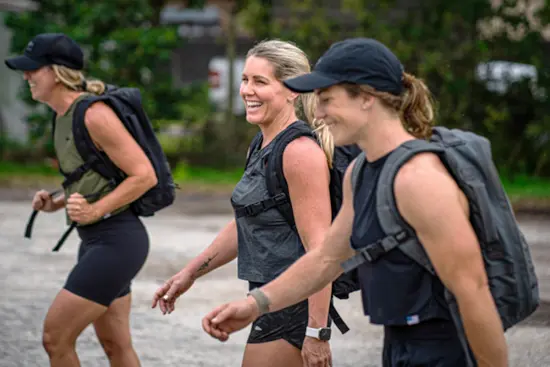
How to Start Fitness Rucking
- Start with 10% of your bodyweight: Around 7 to 10kg for most adults. Enough to feel the difference from unloaded walking without compromising your posture or gait. Books, water bottles, or bags of sand in a standard backpack work fine to begin.
- Walk at pace: A rucking pace of 5 to 6km/h — faster than a casual stroll but not a jog — is the target. Heart rate elevated, breathing deepened, but still able to hold a conversation. That is the zone.
- Keep your posture: The weight will pull you forward. Actively keep your chest up, shoulders back, and core engaged. Letting the pack drag you into a forward hunch defeats part of the purpose and causes lower back strain over longer distances.
- Build duration before adding weight: Start with 30-minute sessions. Build to 60 minutes consistently before increasing the load. Then add 2 to 3kg at a time and rebuild duration before adding more.
- Pack position matters: Weight should sit high and close to your back — not hanging low and away from your body. A properly adjusted hip belt transfers load onto the hips and glutes rather than just the shoulders.
Where to Ruck in Ireland
Elevation multiplies the training effect considerably — a 30-minute ruck on a gradual climb does more work than an hour on flat ground. Ireland has no shortage of options across every province:
- Coastal paths: The Wicklow coastal walk, Wild Atlantic Way sections in Kerry and Clare, and the Antrim cliff paths all provide varied terrain and natural elevation. The combination of wind resistance and gradient makes coastal rucking genuinely demanding.
- Canal towpaths: The Royal Canal and Grand Canal offer flat, consistent surfaces for longer sustained sessions. Lower intensity, good for building duration and base fitness without hammering the legs.
- Phoenix Park, Dublin: Accessible for anyone in the capital, enough elevation variation on the outer loop to make a meaningful session, and popular enough with early morning ruckers that you will not be the only one doing it.
- Coillte forest trails: Managed forest networks across the country have trail systems that work well — soft underfoot, varied terrain, sheltered from wind, and quiet mid-week.
- Wicklow and Mourne Mountains: For longer, more demanding sessions once you have the base. Elevation gain is significant and the terrain is challenging enough that the pack weight almost becomes secondary.
What to Buy — and What You Actually Need to Start
Nothing, initially. A standard backpack and improvised weight is all that is required. When you are consistent and want to invest properly:
- A ruck plate: GORUCK and Rogue both make flat steel weight plates designed to sit flush in a pack. 10kg and 20kg are the most practical options. They distribute load more evenly than improvised weights and last indefinitely.
- A rucksack with load lifters: The GORUCK GR1 is the category benchmark — expensive at €250 or more but exceptionally well-built for sustained weighted use. The Osprey Talon and similar technical daypacks are solid cheaper alternatives that handle rucking well.
- Trail shoes: On anything other than tarmac, grip matters more under load than it does unloaded. The same shoes used for trail running work perfectly for rucking.
Frequently Asked Questions
Fitness rucking is walking with a weighted backpack at a deliberate pace as a form of exercise. The added load increases calorie burn, builds posterior chain strength, and raises cardiovascular demand — all with far less joint impact than running. It requires no gym, no coach, and no special skill. Just a pack, some weight, and ground to cover.
Start with 10% of your bodyweight — typically around 7 to 10kg for most adults. This is enough to feel the difference from unloaded walking without compromising your posture or gait. Build to 15 to 20% of bodyweight over several weeks as your body adapts.
Rucking is deliberate training with a prescribed load and pace — the weight and speed are training variables. Hiking is generally leisure-paced walking on trails. Both are beneficial but serve different goals. Rucking is a workout with measurable outputs; hiking is recreation with physical benefits.
A standard hiking rucksack works fine for starting out. Fill it with books, water bottles, or bags of sand to add weight. Dedicated rucking packs are better built for sustained weighted use but are not necessary to begin.
Any terrain with elevation makes rucking more effective. Coastal paths, forest trails, canal towpaths, and mountain tracks are all within reach of most of the country. The Wicklow Mountains, Wild Atlantic Way sections in Kerry and Clare, and Phoenix Park in Dublin are all solid starting points.
Two to three times a week with at least one rest day between sessions. Rucking is lower impact than running but the load still creates adaptation stress that needs recovery time. As your connective tissue and posterior chain adapt, you can add sessions.
Fitness Bootcamp Ireland
Practical fitness guides for Irish adults — outdoor training, home workouts, gear reviews and event prep. No gym required.