Obstacle course racing is one of the fastest-growing participation sports in Ireland and one of the few fitness events where complete beginners and seasoned athletes genuinely compete on the same course, on the same day, in the same mud. Tough Mudder, Spartan Race, and the OCR World Championships — held in Limerick — have all built serious Irish followings. The events are demanding, chaotic, occasionally very cold, and almost universally described by first-timers as the best thing they have done in years. Here is what they demand and how to be ready.
The appeal is not hard to understand. Most gym training happens in isolation, produces abstract metrics, and ends with a shower and a protein shake. An OCR event ends with a sense of genuine physical accomplishment, mud in places you did not anticipate, and a story worth telling. The format is also inherently social — obstacles require team effort, strangers help each other over walls and through water, and the atmosphere is entirely different from a road race. You are not racing against other people. You are working through a course with them.
What OCR Actually Demands Physically
The honest answer is: more than most people expect, and less than they fear. The physical demands of a beginner OCR event — typically 5 to 8km with 20 to 30 obstacles — are genuinely broad. You need to be able to run the distance, carry your bodyweight over walls and through crawls, hang and swing from grip obstacles, wade through cold water, and do all of this while progressively fatigued. No single athletic quality dominates. The person who is best at running is not necessarily the best at OCR.
Grip strength is the most commonly overlooked requirement. Monkey bars, rope climbs, hanging obstacles, and carries all demand sustained grip under fatigue. Most people who train for OCR by running and doing press-ups discover their grip fails before their legs do. Upper body pushing and pulling strength matters in ways that cardio-only preparation does not address. Running plus bodyweight strength plus grip work is the minimum effective preparation.
Cold water tolerance is real. Most Irish OCR events involve water obstacles regardless of the season, and the psychological barrier of deliberately entering cold water when you are already tired and cold is meaningful. People who have practised cold exposure — cold showers, outdoor swimming, cold plunging — handle the water obstacles considerably better than those who have not.
Why It Is Worth Doing
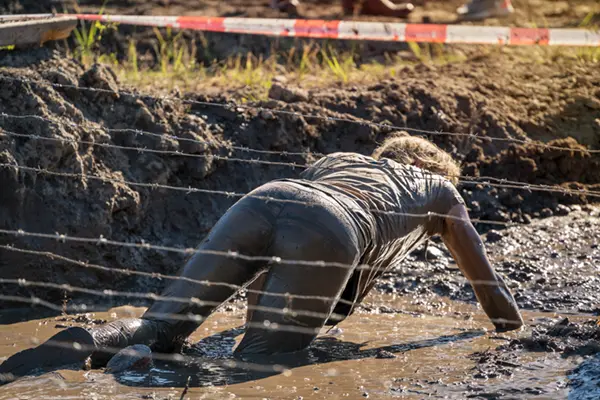
The fitness benefits are secondary to the experience, which is unusual for a training article to say but true for most participants. OCR events push people to do things they would not otherwise attempt — climbing walls, jumping into cold water, crawling under barbed wire in the rain. That kind of deliberate discomfort produces a confidence and resilience that carries over into daily life in ways that hitting a personal best on a treadmill does not.
The training effect is also real. The combination of cardiovascular endurance, functional strength, grip work, and mental resilience that OCR preparation develops produces a broader fitness base than most single-discipline training. People who train for OCR events consistently tend to find that other physical activities become noticeably easier.
If you are looking for a specific goal to train toward — something with a date, a location, and a finish line — signing up for an OCR event is one of the most effective ways to generate consistent training motivation. The knowledge that you will be on a course in eight weeks, in public, with people watching, is a powerful incentive to do the sessions.
The Physical Qualities to Build
Running base first — you need to be comfortable covering the course distance at a sustainable pace before adding anything else. A 5km run is the minimum for a beginner event; 8 to 10km comfortable running capacity gives you margin. Build this with three runs per week, gradually increasing one long run per week over eight to twelve weeks.
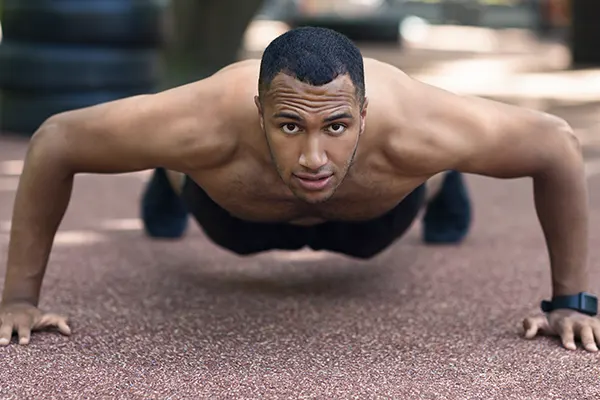
Upper body pulling and pushing second. Pull-ups, press-ups, and ring rows cover the main patterns. Grip hangs — simply hanging from a bar for time — are the most specific grip preparation available and require nothing beyond a pull-up bar. Hanging for 60 seconds continuously is a realistic goal and good preparation for the hanging obstacles.
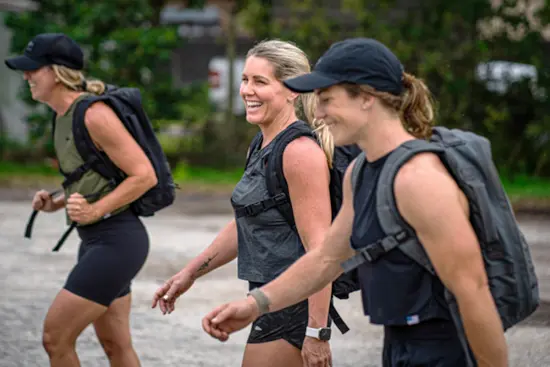
Carries and load-bearing third. Sandbag carries, bucket carries, and loaded rucking develop the specific endurance needed for OCR carry obstacles. The training does not need to be complicated — pick something heavy up and walk with it for time. Your lower back, core, and grip will thank you on the day.
Frequently Asked Questions
You need to be able to run 5km comfortably, do at least 10 press-ups and 10 bodyweight squats without stopping, and be comfortable getting wet and cold. Most beginner OCR events are completable by anyone with reasonable base fitness and the willingness to finish.
Tough Mudder, Spartan Race, and Survival of the Fittest all run events in Ireland annually. Events range from 5km entry-level races to full-day 20km+ courses.
For most first-timers it is the accumulated fatigue of running between obstacles in muddy terrain, often wet and cold. Upper body obstacles become difficult when your grip is cold and arms already tired. Training grip strength and running in tired conditions prepares you better than obstacle-specific drills.
Trail shoes with drainage are better than road shoes in muddy conditions. Avoid cotton — it becomes heavy and cold when wet. A moisture-wicking base layer is the standard. Leave anything you do not want destroyed at home.
Eight to twelve weeks is enough for most beginner events with a basic fitness base already in place. Starting from nothing, allow four to six months. Running, bodyweight strength, and grip work covers the main physical demands.
Fitness Bootcamp Ireland
Practical fitness guides for Irish adults — outdoor training, home workouts, gear reviews and event prep. No gym required.