Cold plunging and ice baths have gone from an elite athlete recovery secret to something your neighbour is doing in a barrel in their garden. The trend is real, the science is genuinely interesting, and Ireland — where cold tap water is already halfway there year-round — is a surprisingly good place to practise it. Here is what cold water immersion actually does, why people keep doing it, and what to expect when you start.
The idea is simple: expose your body to cold water for a short period, repeatedly, and over time your body adapts in ways that improve recovery, mood, and resilience. The discomfort is the point — not in a punishing way, but in the sense that deliberately doing something difficult trains your nervous system to respond to stress more calmly. That adaptation carries over into other areas of life in ways that are hard to quantify but easy to notice.
What Cold Plunging Actually Does to Your Body
The moment you enter cold water, your body triggers a stress response — heart rate spikes, breathing shallows, blood vessels constrict. With repeated exposure, the magnitude of that response decreases. Your nervous system learns to tolerate and then manage the stress more efficiently. This is called cold water adaptation and it is why regular cold plungers report feeling calmer and more focused in other high-stress situations.
The more concrete physical benefits that are well-supported by research include reduced muscle soreness after intense training, faster perceived recovery, and a short-term boost in alertness and mood driven by noradrenaline release. The dopamine increase documented after cold exposure — up to 250% above baseline in some studies — is the likely explanation for why regular cold plungers report improved mood and motivation that persists for hours after the plunge.
Inflammation reduction is real but context-dependent. Cold immersion reduces the inflammatory response after hard training, which speeds recovery from endurance work and high-intensity sessions. The same mechanism may reduce hypertrophy gains if you plunge immediately after strength training — the inflammation it damps down is part of the adaptation process for muscle growth.
Who Is It For
Cold plunging suits people who train hard and want to recover faster, people who are drawn to the mental challenge of deliberate discomfort, and people looking for a simple daily practice that resets focus and mood. It is not a replacement for sleep, nutrition, or good training programming — but as an addition to those, the evidence is solid enough to be worth trying.
It is not for everyone. The cardiovascular stress is real and people with heart conditions or circulatory problems should speak to a doctor before starting. The mental component also puts some people off entirely, which is completely legitimate — there is no obligation to sit in cold water if the idea holds no appeal.
How to Start
The simplest starting point is a cold shower — finish your normal shower with 60 to 90 seconds of the coldest water available. It is uncomfortable, it is accessible, and it starts the adaptation process without requiring any equipment. Most people who eventually move to dedicated cold plunge setups started this way.
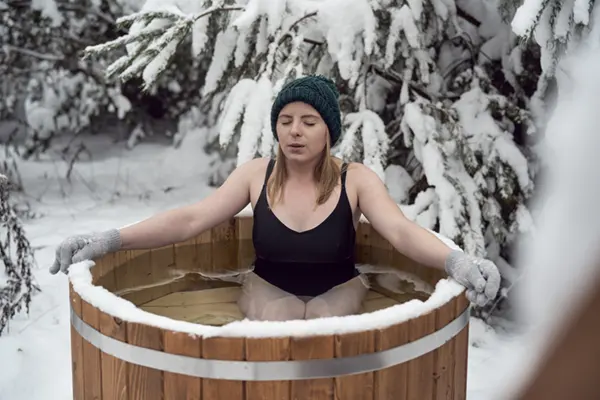
From there, a cold plunge tub, a stock tank, or even a large plastic barrel filled with cold water and ice is the typical progression. Water between 10°C and 15°C is the effective range — cold enough to trigger the stress response, not so cold that you are managing hypothermia risk from the first minute. In Ireland in winter, cold tap water runs at 8–10°C without adding ice at all.
Start with 90 seconds. Build over weeks to three or four minutes. Breathe slowly and deliberately from the moment you enter — nasal breathing helps regulate the initial stress response considerably. Get out before your skin goes fully numb. Warm up passively after — let your body generate its own heat rather than immediately jumping in a hot shower, as the rewarming process is part of the physiological benefit.
What to Buy
You do not need to spend much to start. A cold shower costs nothing. A basic plastic barrel or stock tank is under €100. Dedicated cold plunge tubs with temperature control — brands like Lumi Recovery and Ice Barrel — are available from €400 upward and worth it if you are serious about daily practice. A waterproof thermometer is useful for monitoring water temperature precisely. That is the full list.
Frequently Asked Questions
The research most commonly cited uses water between 10°C and 15°C. Below 10°C increases the stress on the body significantly and is not necessary for most of the benefits. Cold tap water in an Irish winter sits around 8–10°C naturally, which is sufficient.
Two to four minutes is the effective range for recovery benefits. There is no evidence that longer than ten minutes adds benefit, and it meaningfully increases risks. Start with 90 seconds and build gradually.
Cold water immersion carries real cardiovascular stress. People with heart conditions, hypertension, or circulatory problems should consult a doctor before starting. Never cold plunge alone.
Cold plunging is deliberate short-duration immersion in a controlled setting. Cold water swimming involves swimming distances in open water with additional risks from currents and distance. Both expose you to cold stress but the context and risk profile are different.
There is evidence that cold immersion immediately after strength training may blunt hypertrophy. For recovery from endurance training it is beneficial. Avoid ice baths in the two hours immediately after a weights session if muscle gain is the priority.
Fitness Bootcamp Ireland
Practical fitness guides for Irish adults — outdoor training, home workouts, gear reviews and event prep. No gym required.